Gameplay systems & narrative
The Revenant
Possession as a playable choice.
- My contribution
- Game concept, narrative and systems design direction; prototype playtesting and iteration.
- Project
- Third-person action RPG · Unreal Engine 5.8
The design goal
Let the player chain from body to body without possession feeling like a menu, while keeping spirit form vulnerable and readable.
The possession loop
Each change of form alters the player’s opportunities and exposure.
- SpiritFind an opening.
The tether drains. - PossessEnter a valid host.
Take control. - EmbodiedUse the body.
The tether restores. - Release or chainLeave the host.
AI regains control.
Design model derived from the prototype specification. It is not a playable demo.
Make possession legible
A target’s awareness, position and state determine whether it can be possessed. Failed attempts communicate a reason, such as distance, facing direction or alertness. The design turns possession into a decision the player can understand and improve at.
Two forms, different opportunities
Embodiment restores the spirit’s tether and gives access to a body’s abilities. Leaving a host opens spirit movement and passage through designated gaps, but starts the pressure of being exposed. The level must offer reasons to choose each form.
A playtest changed the next question
After playing the first possession prototype, I identified a problem: identical guards made the available bodies feel interchangeable. The next design work therefore focuses on distinct body roles and reactions after release, so choosing a host changes the player’s options.
A city shaped by its visual rules
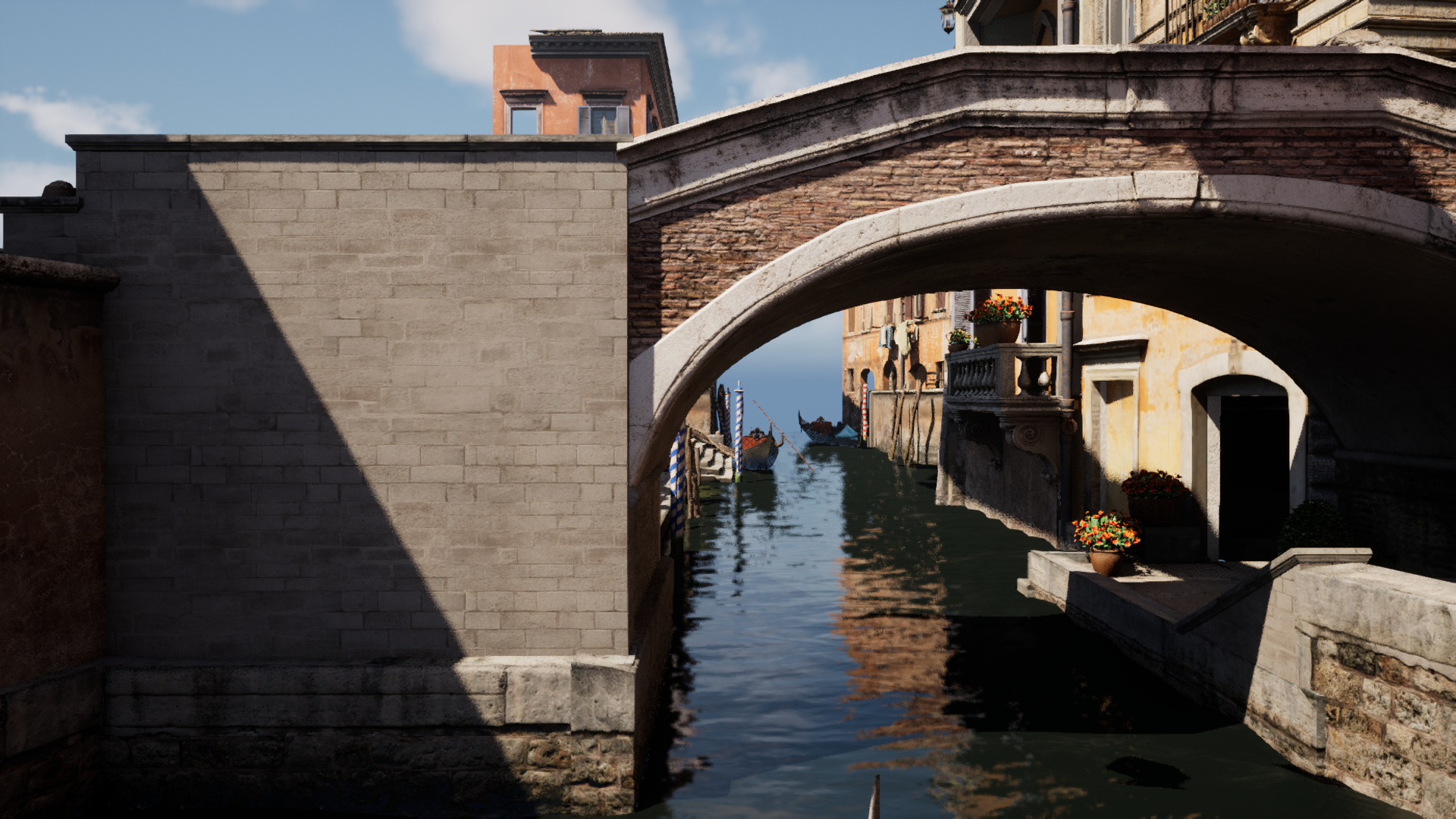
The Art Bible grounds Serenza in late-Renaissance Venice: worn brick, Istrian stone, plaster, timber and glass. Warm practical light belongs to the living city; cold glass and black water define the drowned Afterlife. Mirrors connect that visual direction to the threat of hunters entering the world. The environment study shows a material and lighting benchmark while the playable locations continue to develop.
Work samples
Production context
Game concept, narrative and systems design direction by Kirill Sakhin, developed with AI-assisted workflows. The environment study uses Scans Factory’s Venice – Italian City assets and an adapted asset-pack composition in the project’s look-development level. It demonstrates a visual benchmark, with project lighting, rather than a finished gameplay location. The art direction follows the project Art Bible.